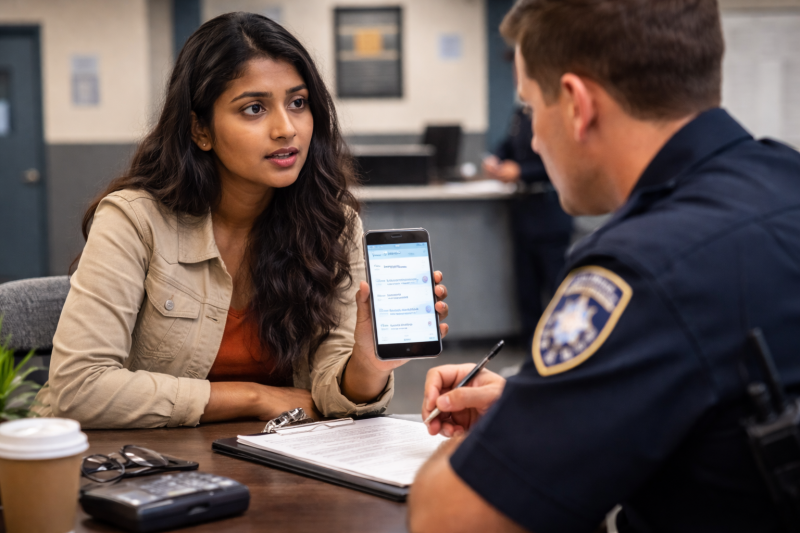
Reporting stalking is a courageous step. For many survivors, it can feel intimidating and overwhelming. Knowing what to expect — and how to prepare — can make the process smoother and more effective.
While every situation is different, many police officers in Canada take stalking reports seriously and work hard to protect victims. When both survivors and law enforcement are informed and prepared, outcomes improve.
This guide explains how to work effectively with police when reporting stalking.
Understand What Police Need
Stalking cases are often built on patterns of behaviour.
Police look for:
• Repeated unwanted contact
• Evidence of escalation
• Proof of fear for safety
• Clear documentation
The more organized your information, the easier it is for officers to act.
You can read our guide on how to document stalking for legal protection for step-by-step tips.
Bring Organized Documentation
When making a report, consider bringing:
• A printed incident timeline
• Screenshots with timestamps
• Saved voicemails or messages
• Names of witnesses
• Dates and locations of incidents
Clear documentation strengthens your case and helps officers identify patterns quickly.
Be Clear About Your Safety Concerns
It is important to communicate:
• How the behaviour is affecting you
• Whether you fear for your safety
• Any escalation you have noticed
• Any prior attempts to set boundaries
Criminal harassment laws in Canada often focus on repeated behaviour that causes fear.
Your fear matters.
Ask Questions About Next Steps
After filing a report, you may wish to ask:
• What happens next?
• Will the person be contacted?
• What thresholds apply for charges?
• Should I continue documenting?
• What safety precautions do you recommend?
Understanding the process can reduce anxiety.
Request a File Number
Always ask for:
• A police file number
• The investigating officer’s name
• Contact information for follow-up
Having a file number ensures your complaint is formally recorded.
Stay Engaged and Communicate Updates
If additional incidents occur:
• Contact the investigating officer
• Provide updated documentation
• Report any escalation immediately
Ongoing communication can strengthen the case.
Work With Victim Services
Many police departments connect survivors with victim services.
Victim support workers can help with:
• Court preparation
• Safety planning
• Emotional support
• Legal process explanations
They are valuable allies during stressful periods.
Continue Prioritizing Your Safety
Even while police are handling a case, continue:
• Adjusting routines if necessary
• Limiting digital exposure
• Strengthening personal safety planning
Stalking cases can take time to resolve.
Safety remains the priority.
Acknowledging Positive Law Enforcement Partnerships
When law enforcement responds professionally, listens carefully, and acts promptly, it can make an enormous difference for survivors.
Supportive officers:
• Reduce fear
• Improve trust
• Increase case strength
• Help prevent escalation
Positive collaboration between survivors and police strengthens community safety overall.
How Safety Warrior Mama Supports Survivors
Safety Warrior Mama provides survivor-led education and guidance to help individuals prepare strong documentation, understand legal processes, and advocate confidently.
We work to empower survivors while respecting the important role of law enforcement in protecting community safety.
If you need help preparing to report or strengthening your documentation, contact us for guidance.
You deserve safety — and support.