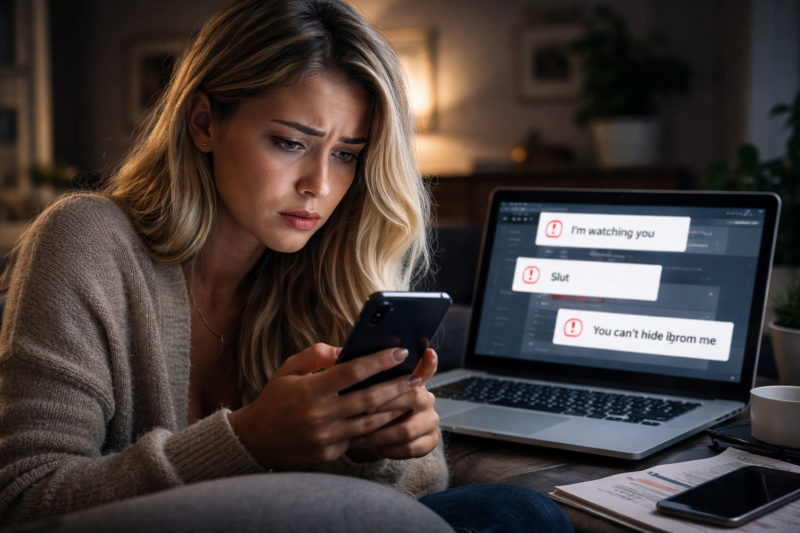
Cyberstalking is one of the fastest-growing forms of harassment in Canada. Unlike traditional stalking, it happens through phones, social media, email, and digital platforms — and it can feel constant, invasive, and difficult to escape.
If you are experiencing repeated unwanted online contact, monitoring, threats, or impersonation, this guide explains how to protect yourself from cyberstalking and strengthen your safety.
What Is Cyberstalking?
Cyberstalking involves repeated online behaviour that causes fear, distress, or intimidation.
Examples include:
• Repeated unwanted messages
• Fake social media accounts
• Monitoring your online activity
• Tracking your digital presence
• Hacking attempts
• Impersonating you
• Posting private information
Cyberstalking may begin online but can escalate offline.
Step 1: Strengthen Your Privacy Settings
Review every platform you use.
✔ Set accounts to private
✔ Remove unknown followers
✔ Limit who can message you
✔ Turn off public tagging
✔ Restrict story visibility
Recheck privacy settings regularly — platforms update frequently.
Step 2: Stop Sharing Real-Time Information
Avoid posting:
• Live locations
• Daily routines
• Travel plans
• Work schedules
• Frequently visited places
Post after you leave a location — not while you are there.
Step 3: Enable Two-Factor Authentication (2FA)
Protect your accounts with:
• Strong, unique passwords
• Two-factor authentication
• Secure email recovery settings
Never reuse passwords across platforms.
Step 4: Document Cyberstalking Behaviour
If cyberstalking is happening:
• Screenshot messages
• Save profile URLs
• Record usernames
• Save timestamps
• Keep a detailed incident log
Do not rely on platforms to preserve evidence.
Read our full guide on documenting stalking for legal protection.
Step 5: Avoid Engaging Further
After documenting:
• Block the account
• Restrict access
• Report the profile
• Avoid public arguments
Engagement can sometimes escalate behaviour.
Step 6: Check Location Sharing Apps
Review:
• Apple Find My
• Google Location Sharing
• Snapchat Snap Map
• Fitness tracking apps
• Vehicle tracking systems
Turn off sharing with anyone you do not fully trust.
Step 7: Watch for Impersonation
Search your name online periodically.
Look for:
• Fake accounts
• Duplicate profiles
• Copied photos
• Suspicious email addresses
Report impersonation immediately through the platform.
Step 8: Secure Your Devices
If you suspect compromised devices:
• Update software
• Run security scans
• Change passwords
• Log out of unknown sessions
• Consider professional digital support
Avoid logging into sensitive accounts on public Wi-Fi.
When Cyberstalking Becomes Criminal
In Canada, cyberstalking may qualify as criminal harassment if behaviour is repeated and causes fear for safety.
Even if the behaviour is “only online,” threats and monitoring can meet legal thresholds.
If you feel unsafe, contact police and provide organized documentation.
Learn more about stalking laws in Canada in our legal rights guide.
The Mental Impact of Cyberstalking
Cyberstalking can cause:
• Hypervigilance
• Anxiety
• Fear of posting
• Sleep disruption
• Isolation
These responses are valid.
Support services and trauma-informed counselling can help you regain a sense of safety.
How Safety Warrior Mama Supports Online Safety
Safety Warrior Mama provides survivor-led education on cyberstalking awareness, digital safety, and documentation strategies across British Columbia and Canada.
We help individuals and organizations understand modern digital risk and prevention.
If you are experiencing cyberstalking and need guidance, contact us for support.
You deserve safety — online and offline.